Bergfelt Racing Enterprises, LLC
4412 W. 6th Avenue
West Mayfield Boro
Beaver Falls, PA 15010-1915
U.S.A.
(724) 462-7440
info@bergfeltracing.com
Publisher of

Orders are now being taken for the official 2013 UAS t-shirt.

click on the picture to order on-line or call 724-462-7440
------------------
Headquarters for the

----------------
Publisher of
Orders are now being taken for the official 2013 UAS t-shirt.
click on the picture to order on-line or call 724-462-7440
------------------
Headquarters for the
------------------
Publisher of
Orders are now being taken for the official 2013 UAS t-shirt.
click on the picture to order on-line or call 724-462-7440
------------------
Headquarters for the
Publisher of
Orders are now being taken for the official 2013 UAS t-shirt.
click on the picture to order on-line or call 724-462-7440
------------------
Headquarters for the
Publisher of
Orders are now being taken for the official 2013 UAS t-shirt.
click on the picture to order on-line or call 724-462-7440
------------------
Headquarters for the
Publisher of
Orders are now being taken for the official 2013 UAS t-shirt.
click on the picture to order on-line or call 724-462-7440
------------------
Headquarters for the
----------------
Publisher of
Orders are now being taken for the official 2013 UAS t-shirt.
click on the picture to order on-line or call 724-462-7440
------------------
Headquarters for the
Introduction toBergfelt Racing Enterprises, LLC |
 |
 |
Bergfelt Racing Enterprises, LLC, sometimes referred to as B. R. E. Small Engines, LLC, has been serving karting enthusiasts since1978 and is one of the most experienced go-kart shops in Western Pennsylvania. This leader in karting currently focuses on; |
1. Fabrication of Bergfelt's Bumpers, the most popular custom aftermarket race kart bumpers in the USA. 2. Sales, and complete service of Comer-C51 race kart engines for kid karts. Our kid kart engines are winning races from coast to coast and border to border. Their customers in the United Kingdom, Kenya, Columbia, Venezuela and Mexico have won races with their engines. 3. Rebuiding, blueprinting and modification service of most race kart engines both 2-cycle and 4-cycle, 4. Fabrication and installation of our exclusive inlet needle and seats in Mikuni diaphragm carburetors as well as other race kart carburetor work,
|
5. is a source for most karting accessories. in addition to new items, Bergfelt Racing Enterprises, LLC has a large selection of previously owned parts being sold on consignment. 6. Coming soon will be our all new Lever Lift Race Kart Rolling Kart Stands and the BT-KTM 250 engine for UAS Racing. 7 .Bergfelt Racing Enterprises, LLC serves as national headquarters of the Unlimited All-Stars, 8. and publishes American Muscle Kart, the Official Publication of the Unlimited All-Stars. |
| It should be understood that this is not a discount warehouse with impersonal service, rather it is a complete karting service center that caters to the individual needs of kart racers, especially new comers to the sport. Bergfelt Racing Enterprises, LLC was one of the first dealers of the CRG Heron Oval chassis and were instrumental in it's development. Unfortunately that kart is no longer in production. Bergfelt Racing Enterprises, LLC is a full service kart shop that operates out of dedicated building that boasts a large show-room, shop that provides engine work, fabricating and machine work. | The story of Bergfelt Racing Enterprises, LLC is really the saga of Mark Bergfelt's passion for the sport of kart racing. Growing up in a working class neighborhood on the North Side of the City of Pittsburgh, it was more likely that he would have developed an interest in football, baseball and perhaps hockey; the more common pastimes of boys from the Burgh. Clumsy with sticks and balls, Mark found his niche in his dad's basement workshop, building simple gravity powered carts, then a paper mache bodied soap box derby car and finally a yard kart built from discarded bed angle iron. That kart, powered by a 2 hp Briggs & Stratton reel type lawn mower engine was used many hours on the hilly and windy roads of a local cemetery.
|
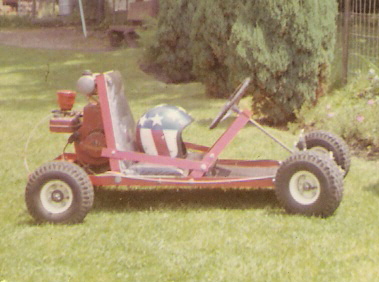 |
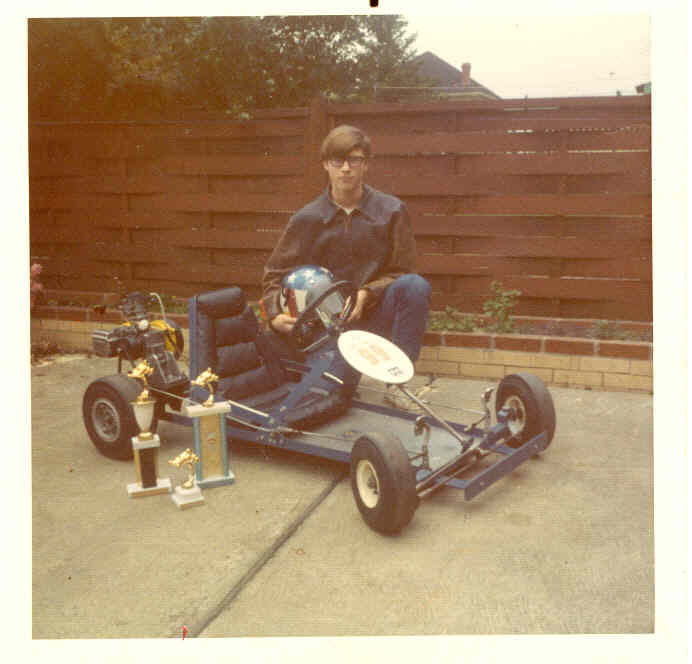
After two fun summers that kart was converted to a McCulloch powered race kart that first saw action at the Shoemaker Motor Sports Track in 1972. During that period of time the Bergfelt family race team consisting of Mark, his brother Eric and their dad, also occasionally visited Kugler Raceway Park (now Adkins Speedway) and even competed at the 1974 WKA nationals at Batavia, New York. |
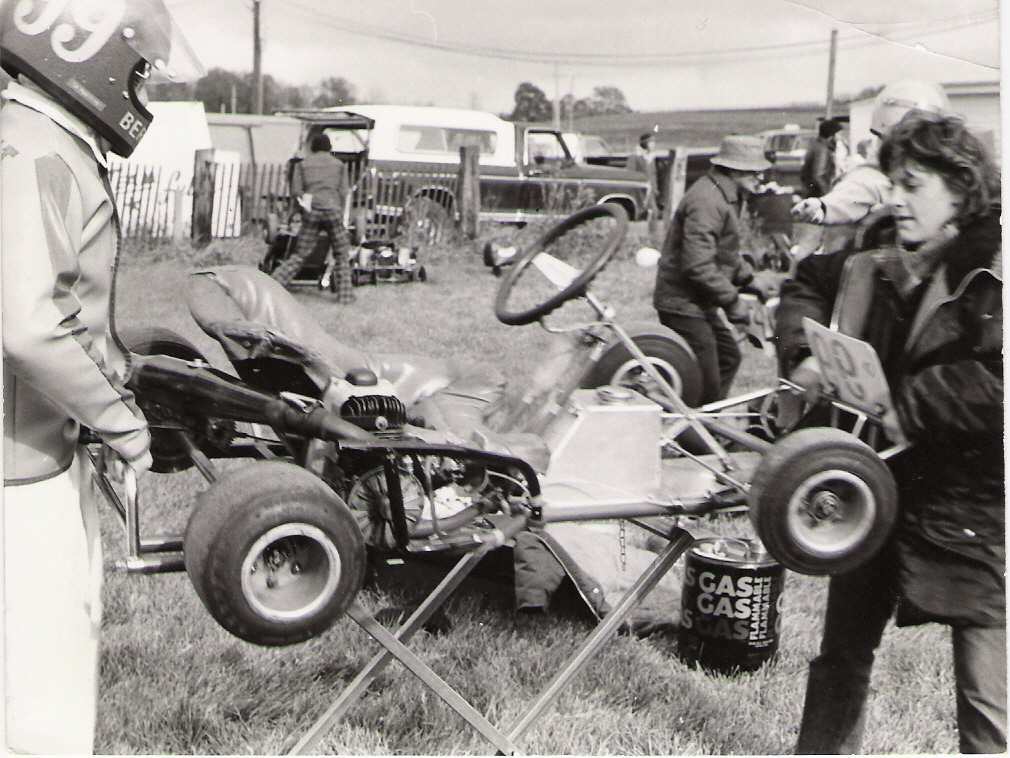
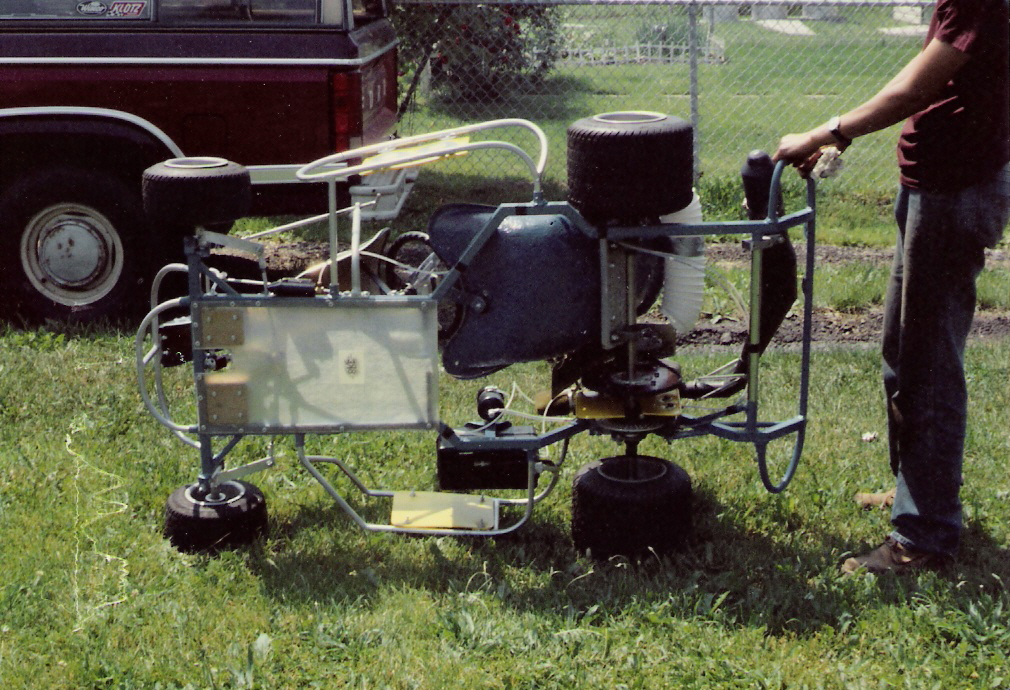
This kart was originally built as a yard kart by Mark Bergfelt out of a discarded angle iron bed frame and other materials that he could find for next to nothing. it was converted to the race kart shown here to comply with International Kart Federation rules. This picture was taken in 1972 after it's first season of competition. |
 |
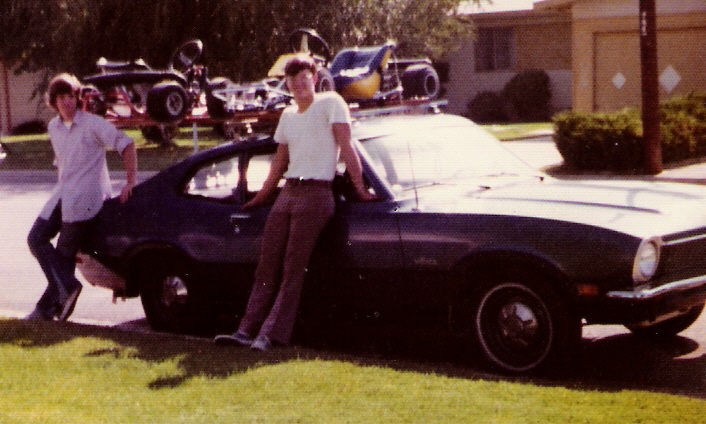 |
In 1974 Mark enlisted in the United States Air Force. For the first two years of his stint with military service he was stationed at Castle Air Force Base in Central California. Since he was stationed just minutes away from the then brand new Atwater International Speedway, as it was known then, he joined up with the Merced Kart Club, bought a kart from a local manufacturer, and began racing at Atwater as well as Kerman, Newman and Lodi. For quite a while he toted his kart around on the roof of his car.
|
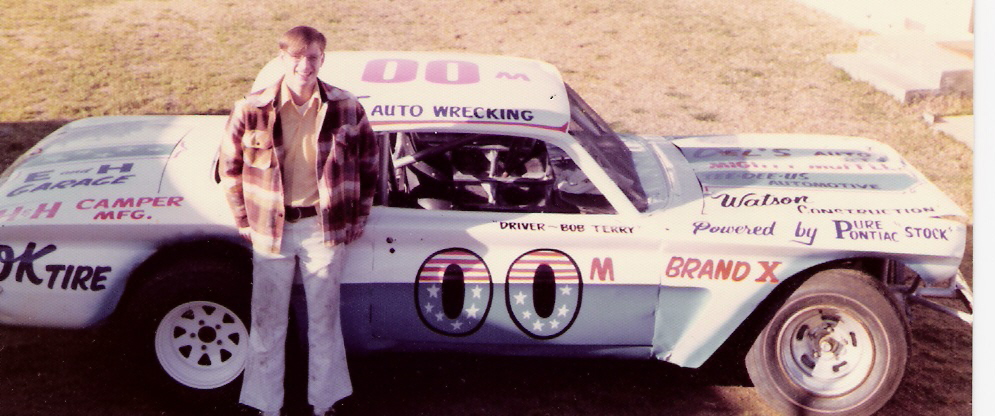
While stationed in California, Bob Terry, a local stock car legend, who was a regular competitor at the Merced County Fairgrounds Speedway in NASCAR's California Stock Car Division, took Mark under his wing. Mark worked long and late on that stock car but what he learned from Bob about racing in general and car set-up turned out to be incredibly valuable. Bob also allowed Mark to use his garage/shop to work on his kart and build a trailer.
|
 |
It's true love for sure. In 1977 Teresa had already been helping Mark with his kart racing, and tolerating it for three years. The couple celebrated their 31th wedding anniversary on July 11, 2012. |
After two years in California, the young airman was transferred to McGuire Air Force Base in New Jersey. At McGuire AFB, he was trusted with the job as a Supply Inspector. It was not exciting work, but it was educational. Although he never raced there, Mark did get involved in the kart racing activities at New Egypt Speedway. On those weekends when he could get home to Pittsburgh to spend time with his girl friend Teresa, Mark would team up with his brother and go kart racing at Navarre Speedway in Ohio.
|
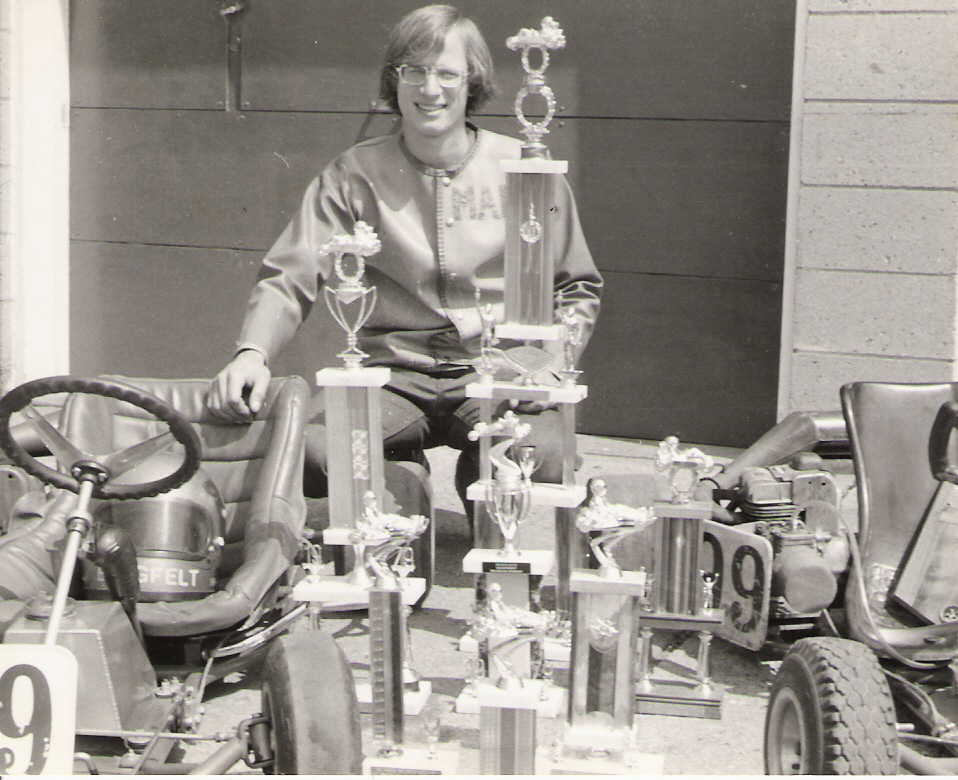
After being discharged from the Air Force, Mark enrolled at California State College (of Pennsylvania) as an industrial arts (education) major. He did so to expand on his technical knowledge and skills and also to learn how to better share his passion for designing, and building things, especially machinery. Bergfelt Racing Enterprises was born in the spring of 1978.
|
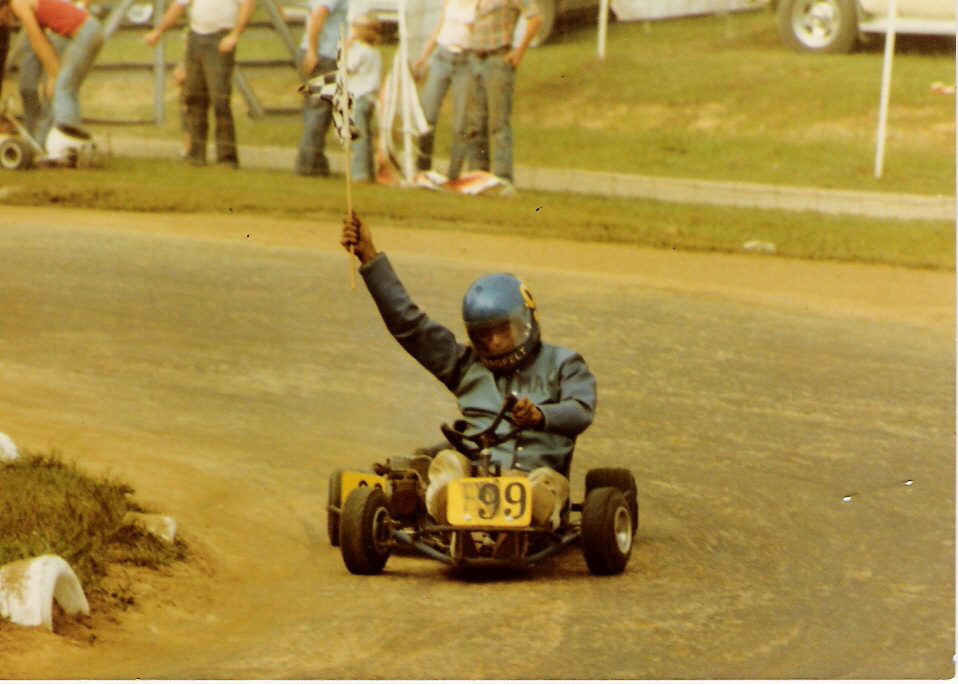
After a feature win at Dusty Valley Speedway, New Athens, Ohio, where they turned right on a oval race track. This was in 1979. |
|
Mark decided to use his knowledge of mechanics to create his own summer job. His father gave him permission to use half of his two car garage to service mostly lawnmowers and some karts as well. The business allowed the opportunity for Mark and his fiance Teresa to be regular participants at Woodland Speedway, Columbiana Speedway, Red Line Kart Track, Dusty Valley Speedway and an occasional trip to the indoor races at Marion, Ohio. Mark graduated Suma Cum Lade in December 1980. |
It was not difficult for the new teacher to secure a position in the Pittsburgh Public Schools. After being with the district for several years, Mark had the opportunity to participate on a curriculum writing committee to revise the power mechanics curriculum. Knowing Mark's interest in kart racing, the committee suggested that Mark write an instruction book, Build a Go-Kart, to be used as a portion of the second year of that course of study. The book became available to teachers in 1987. Mark hopes to one day find the time to make a pdf version of his book and the curriculum that he developed around it available to the general public and especially other teachers.
|
At about the same time, Don Gamble a fellow industrial arts/technical education teacher who was also very involved in the auto racing scene in the Pittsburgh Area and who also published The Official Speedway Program, approached Mark about writing a kart racing column, "The Karting Connection" for the publication. Mark's column immediately became very popular with kart racers in the region. As time went on the publication grew and eventually became know as RPM (Racing's almost Perfect Magazine). Mark continued with his column until the Magazine was sold. Don was, and still is, a very industrious person, and also hosted a weekly racing talk show, Rappin' on Racin'. The three hour show was very popular with gear heads in the Greater Pittsburgh area. Mark contributed to the show with a weekly segment also call the "Karing Connection". The Burris Western Pennsylvania Speedway Series and the WKA regional series The Kingdom of Outlaws, were Mark served on the board of directors as the 2-Cycle technical inspector, provided much of the material for the column. Mark's segment was an integral part of Don's radio show for seven years. Several years later he began writing occasional technical articles for National Kart News and for a while was listed as one of their contributing editors.
|
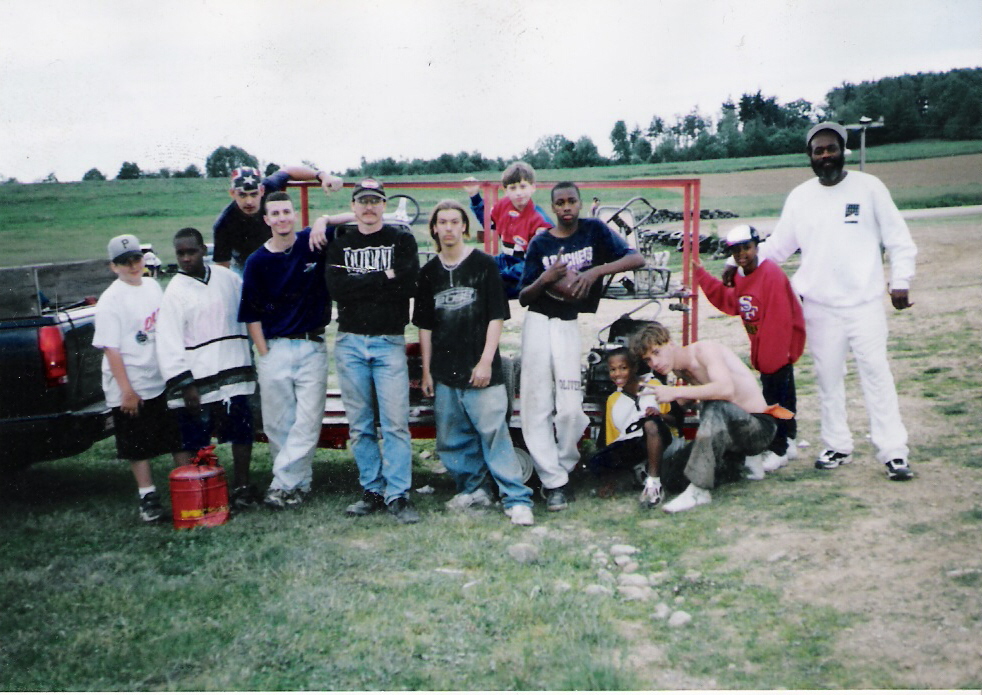
In 1988 the School District of Pittsburgh received a very large grant from the Anne E. Casey Foundation to develop programs aimed at students who were at risk of not graduating from high school to encourage them to stick it out. An assistant principal suggested that Mark present a proposal to develop the Oliver High Go-Kart Building and Racing Club. The book Build a Go-Kart would provide the basic blue print for the karts. The club was formed and in the spring of 1989 twelve student made karts were on hand for action at Blanket Hill Speedway. Since that time, Mark has been assigned to two other schools and has developed similar clubs at each. For more information about the high school karting program that Mark developed go to http://www.bergfeltracing.com/carrickkartclub.html . Mark recognized the efforts of his students with his radio spots and magazine columns. Word of mouth also contributed to the local fame of the club.
|
 |
|
In 1990 Mark recognized that the karting class in which he competed, unlimited 2-cycle, was beginning to draw fewer and fewer entries. Not wanting to see the class die, he decided to do something about it. He selected a series of high quality and profile races in the region, wrote up and duplicated that schedule and distributed it to as many interested racers as he could. Involvement with the magazines and radio allowed Mark forums for spreading the word about his Unlimited Professional Dirt Kart Challenge Circuit. The promoter of another regional series with a similar sounding name threatened to sue Mark over his choice of name. Mark's reply was that he did not like the name any way and hosted a contest to come up with a more suitable name; The Unlimited All-Stars. To learn more about the Unlimited All-Stars go to http://www.unlimitedallstars.org
|
In 2008 Mark began publishing American Muscle Kart, the official publication of the Unlimited All-Stars.
|
|
|
The Pittsburgh Chapter of the Arthritis Foundation called upon Mark to serve as the Technical Director for their Mini-Grand Prix for the first time around 1992. Mark, with help and support from his wife Teresa, served in that capacity for seven seasons and received a National Volunteer Service Citation from the Arthritis foundation for his work. |
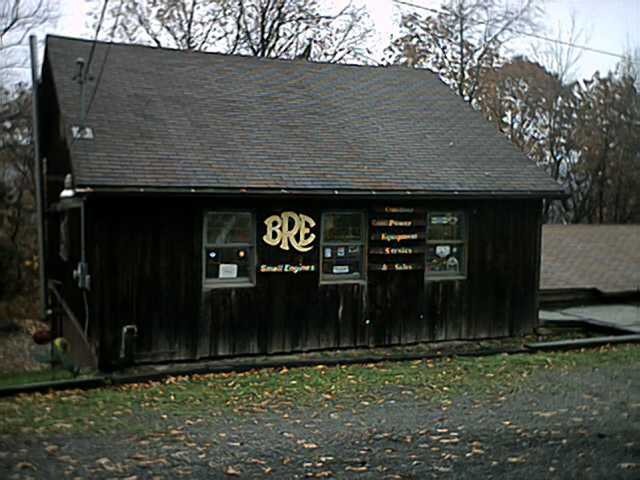
| Bergfelt Racing Enterprises, LLC has used three different buildings as it's base of operation. The first, as mentioned earlier, was Mark's dad's garage. The second was Mark's two story garage (well actually it had a basement) that was behind the home that he and Teresa owned in Pittsburgh. The business was moved to West Mayfield, Pennsylvania, it's current location, in 1994. | 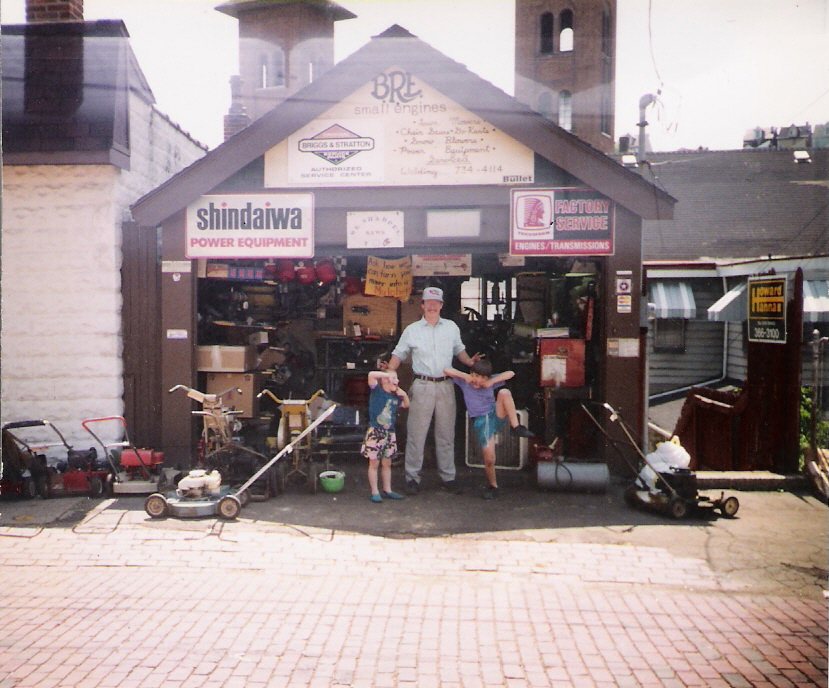 |
 |
When Mark began his teaching career, he thought that he had made a mistake. He was working mostly with ninth and tenth grade students who for the most part had no interest in learning anything. They especially did not want to think very hard or get their hands dirty and that was a definite requirement for success in Mark's hands-on classes. The student's lack of work ethic was a great source on consternation for Mark. Since he had to get additional college credits to maintain his teaching certification any way, he decided to start working on a mechanical engineering degree at the University of Pittsburgh in the evening. Shortly there after he took the certification test to teach vocational small engine repair. He passed that test easily. Vocational students are usually juniors and seniors and Mark hoped that those students would be more focused. That, in many cases did not pan out, but Mark began to have success with some students and that he found to be very encouraging. At this point he found teaching to be much more rewarding than it had been. After a meeting with the Director of Vocational Education of Pittsburgh who suggested that Mark consider a similar position some day, he decided to cease taking mechanical engineering classes and enter the vocational directors program at Pitt. From that he learned that he did not want to aspire to an administrative position; it was just not for him. He did however, manage to earn enough credit to acquire the equivalency of a masters degree, which he needed to make his teaching certification permanent. Mark has developed a unique curriculum, student assessment system and teaching style. As a result he has helped hundreds of inner city students get a better start in life and knowledge of that gives him great satisfaction.
|
| Offset chassis for speedway racing are common place now-a-days but they were few and far between in the mid-1980's when Mark designed and built this kart. The kart was made out of square tubing, had a titanium axle, the seat was mounted to a plate that was attached to the rear axle with pillow blocks and the engine was mounted above the axle. It was intended for high horsepower karts for the purpose of maximum forward bite. It was designed to convert engine torque into rear wheel bite. The chassis eventually was hinged in front of the engine mount to assist in this dynamic. it did work as intended. The kart was famous locally for pulling wheelies. Although brutal to drive on rough tracks, it was responsible for a lot of first place trophies. |
|
Click on picture for larger image.
Page updated 12/9/2012 |
Before Bergfelt Racing Enterprises was moved to West Mayfield, Mark usually hired his best students to help out with the lawnmower repair portion of the business. In the early years, about 80 % of the business volume was outdoor power equipment work. After moving the business to West Mayfield, the business volume and focus gradually moved more toward the karting side. After the move, Mark worked the business, part time during the school year and full time in the summer. It got to the point where he was overwhelmed with work and Joe Mudrick was hired as service manager and he focused on the outdoor power equipment end of the business and that allowed Mark to concentrate more on the karting side of the business. Joe did a fantastic job, but as time went on, the karting side of the business continued to increase but requests for mower, chain saw and other equipment work began to diminish. This was mostly attributed to trends in the market. The price of lawnmowers has gone down, or at least not gone up. It has become in many cases more economical to replace that equipment than repair it. Joe was offered a job at a larger company that offered more opportunity for him and in the Fall of 2005 Mark found himself operating solo again. Consequently he restructured the business to what it is now dedicated solely to karting. He has never enjoyed it more. In June 2011, Mark retired from the Pittsburgh Public Schools to work full time at Bergfelt Racing Enterprises, LLC. He has never enjoyed it more.
|